Updated October 4, 2026
Note: This article has been revised to include the Windows 11 Start menu update. In November of 2025, Microsoft released an update (KB5067036) that updated the Windows 11 Start menu. This patch has been gradually rolling out, and not all Windows 11 25H2 versions have received it yet. If you have not yet received this update, it will eventually reach your computer.
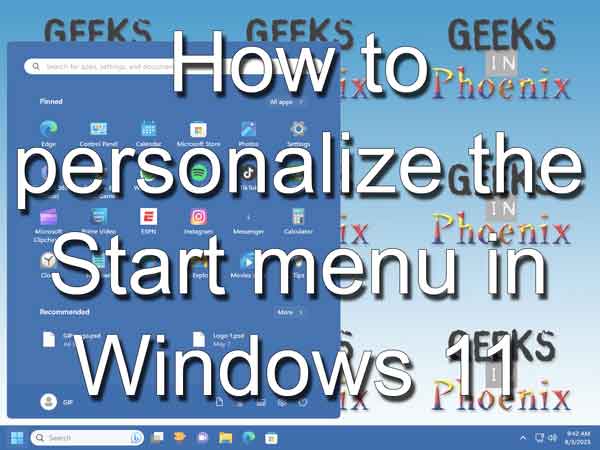
The default Start menu in Windows 11 works fine out of the box, but a few quick changes can make it much more useful. You can move it to the left side of the Taskbar, change its accent color, control what shows up in the Recommended section, and choose which folders appear next to the Power button. Here's how to do all of it.
All of the changes in this article are made inside the Settings app. You can open Settings any of these ways:
- Left-click the Start button
 , then left-click Settings in the list of pinned apps.
- Right-click the Start button to open the Power User menu, then left-click Settings.
- Press the Windows logo key + I.
Once Settings is open, left-click Personalization in the left-hand column to see all of the personalization categories.
Changing the location of the Start menu on the Taskbar
Settings > Personalization > Taskbar > Taskbar behaviors
In Windows 11, the Taskbar is fixed to the bottom of the screen. You can't move it to the sides or top, but you can change the alignment of the Start button between left and center. Open Taskbar behaviors and use the Taskbar alignment drop-down menu to switch between the two options.
Changing the accent color of the Start menu
Settings > Personalization > Colors
To change the Start menu accent color, you first need to be in Dark or Custom mode under Choose your mode. In Dark mode, you can set the accent color for both the Start menu and the Taskbar. In Custom mode, you need to select Dark as the default Windows mode before the accent color option becomes available.
Changing the Start menu options
Settings > Personalization > Start
This is where most of the Start menu customization lives. There are three areas you can adjust:
Recommended has three toggles you can turn on or off:
- Show recently added apps
- Show recommended files in Start, recent files in File Explorer, and items in Jump Lists
- Show recommendations for tips, shortcuts, new apps, and more
All has one toggle:
Other has one toggle and one pull-down menu:
- Show account-related notifications
- Folders lets you choose which folder shortcuts appear on the Start menu next to the Power button. You can enable any combination of: Settings, File Explorer, Documents, Downloads, Music, Pictures, Videos, Network, and Personal Folder.
Changing the Pinned apps on the Start menu
- To add an app or folder to the Pinned area, right-click on it and select Pin to Start.
- To remove an app or folder from the Pinned area, right-click on it and select Unpin from Start.
- To rearrange the Pinned apps, press and hold the left mouse button on the app you want to move and drag it to a new position.
Changing the Recommended files
- To add a file to the Recommended area, open it in its associated program and save it. It will appear in Recommended automatically.
- To remove a file from the Recommended area, right-click on it and select Remove from the list.
A few minutes in Personalization settings can make the Start menu feel a lot more like yours. Move the Start button to the left if you're coming from Windows 10, trim down the Recommended section if you'd rather keep recent files private, and add folder shortcuts next to the Power button to get to the places you use most without digging through File Explorer.